
Criminal Cases in the Bay County Courts
The Circuit Court of the Fourteenth Judicial Circuit hears Bay County felony cases. Bay County Court handles misdemeanors, criminal traffic, and county or municipal ordinance matters. The county's cities do not operate separate municipal courts, so an ordinance prosecution may name a city as a party while its file remains with the Bay County Clerk. Case suffixes help identify the category: CFMA marks circuit criminal, MMMA county criminal, CTMA criminal traffic, and MOMS municipal ordinance.
The Clerk is custodian of the case-centered record, including filings, events, financial entries, and disposition. That role differs from the arresting agency's incident report, the jail's booking record, and FDLE's person-centered statewide history. A suffix identifies forum and case type; it does not establish guilt or reveal the exact degree of an offense.
Searching Benchmark by Bay Case Suffix
The Clerk's Pioneer/Benchmark Case Search offers three routes: name, case number, or citation number. A name is entered as LAST, FIRST MIDDLE, although a last name alone is accepted. A published case-number example is 02000034CFMA. Complete the reCAPTCHA before searching; ordinary specific-case searches and the Events view do not require an account.
Other published suffixes include MMMW for worthless-check matters, MMMO for state statute or ordinance matters, TOMA for wildlife or tobacco, ACMA for animal control, CEMA for code enforcement, and PKMA for parking. Full-calendar and advanced searching require a free access agreement sent to the Clerk's eSupport address.
How to Search Case Records
Benchmark is the main public index for local filed cases. Use the most exact identifier available and remember that disposition entry can lag. The online result is expressly unofficial and should not be the sole basis for legal action.
- Open Benchmark and select Name, Case Number, or Citation Number.
- Enter the party name in the published format, or use the complete case or citation number.
- Complete reCAPTCHA and compare results by filing year and suffix rather than assuming a similar name is a match.
- Open the case and read Events chronologically for filings, hearings, pleas, and disposition entries.
- Request an official copy or certification from the Clerk when the document will be relied upon.
| Field Label | Type | Required | Notes |
|---|---|---|---|
| Name | Radio mode + text | One search mode | Use LAST, FIRST MIDDLE; last name alone is accepted. |
| Case Number | Radio mode + text | One search mode | Use the year, sequence, and published case-type suffix. |
| Citation Number | Radio mode + text | One search mode | Enter the exact citation number. |
| reCAPTCHA | Challenge | Yes | Must be completed before a public search. |
| Login | Username/password | No | Reserved for secure or advanced access. |
The Events Tab Is Not Certified
Benchmark helps locate a case, but its online information is not an official legal document. For a dependable copy, contact the Clerk's criminal records staff at the felony records page, email Criminal@baycoclerk.com, or visit the courthouse. Copies cost $1 per page, certification costs $2, and exemplification costs $7. The felony copy process does not accept personal checks, and published processing is about three to seven working days.
The official Clerk source also explains how disposition and record-copy requests work.
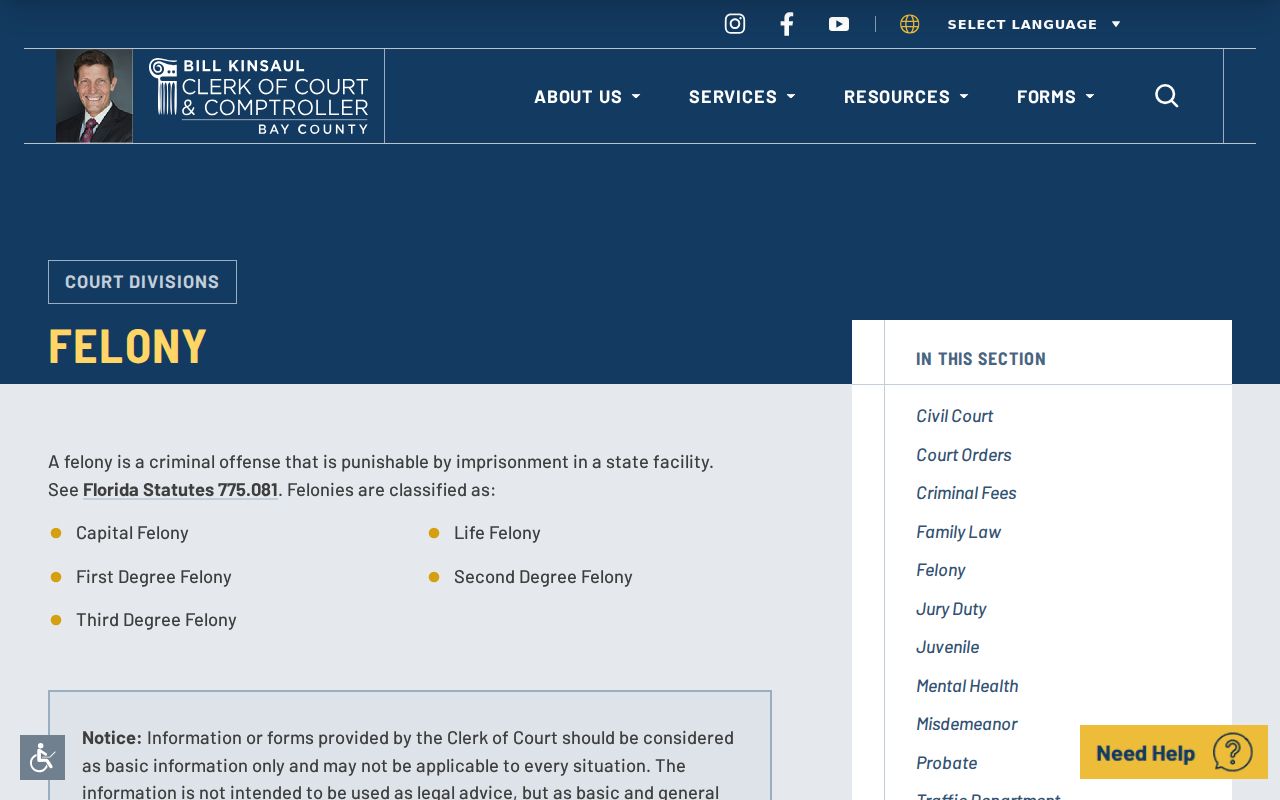
The pictured Clerk page is the correct starting point when a screen result must be replaced by a certified court record.
What the Case File Shows
A criminal file documents the court proceeding rather than every detail known to police. Its most useful pieces identify the filed accusation, the sequence of court activity, and the final recorded outcome. Some entries may be visible before their associated images are available online.
| Case Number & Court | Identifies the year, sequence, case category, and whether Circuit or County Court holds the matter. |
|---|---|
| Charging Document | Shows the charge selected for filing, which may differ from the arresting charge. |
| Docket Entries | Chronologically lists filings, notices, orders, motions, and other recorded events. |
| Hearing Dates | Records scheduled and completed appearances, subject to later changes. |
| Disposition & Judgment | Shows dismissal, plea, trial outcome, adjudication, or other final action once posted. |
| Sentence & Conditions | Records incarceration, probation, financial obligations, and court-ordered conditions when imposed. |
Bay County Room 109 Case Records
The Bay County Courthouse is at 300 E. 4th Street in Panama City. Clerk counters are open Monday through Friday, 8:00 a.m. to 4:30 p.m. Central, and the main number is (850) 747-5100. Misdemeanor records are handled in Room 109; misdemeanor payments go to Room 110. Deputy clerks can assist with searches when an online record is missing or unclear. E-Certify is another official-document route.
Bay's State Attorney office, located at 421 Magnolia Avenue, decides what charges to file and can be relevant when a recent arrest has not yet produced a Clerk case.
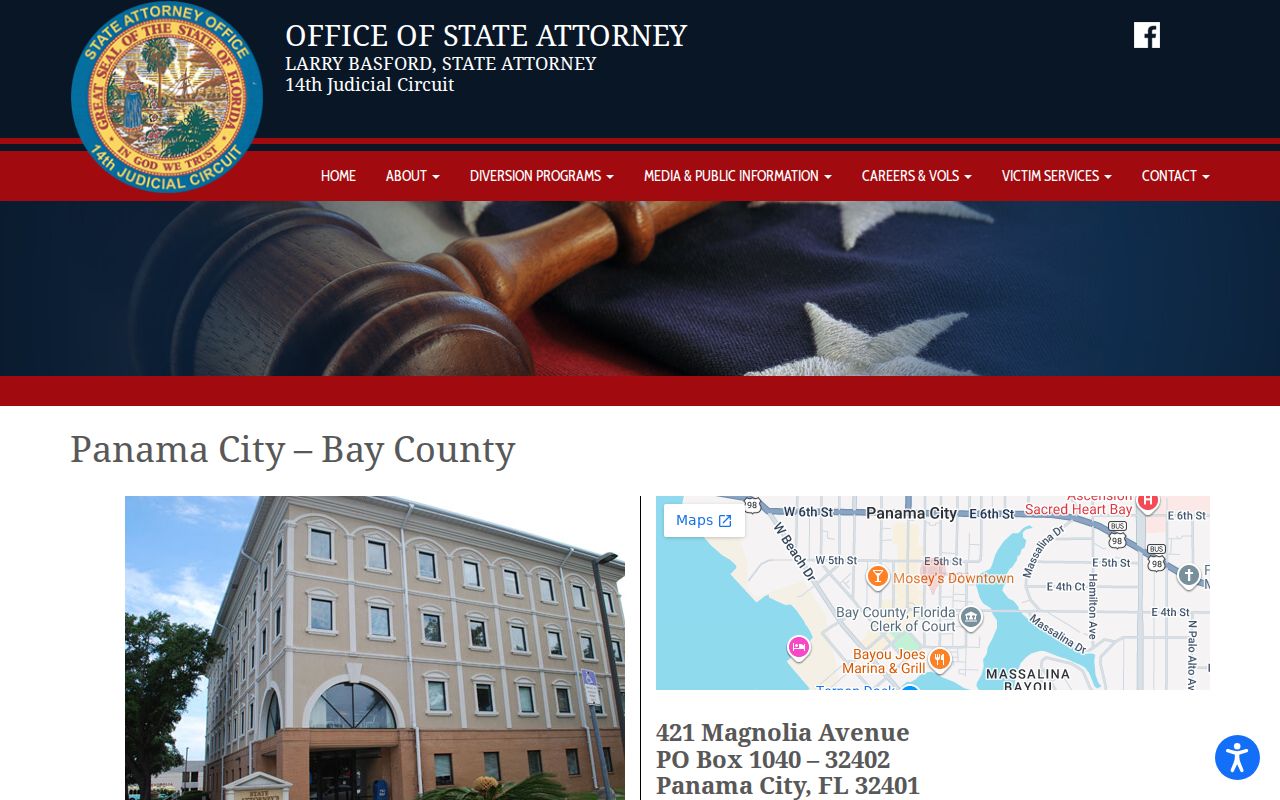
The prosecutor's page supplies office contacts, while the Clerk remains the source for the filed docket and certified court documents.
When a Disposition Has Not Posted
A missing disposition does not establish that a case is still pending or that the arresting charge became the final charge. Start by reading the newest Benchmark Events entries and checking that the case number and suffix match the intended court. If the hearing or plea was recent, allow for the Clerk's stated posting lag. Then contact Criminal@baycoclerk.com or the criminal counter and give the full case number, party name, and approximate event date.
When the outcome matters, request the disposition or judgment rather than relying on a terse event label. The Clerk can provide an ordinary copy, a certified copy, or E-Certify access as appropriate. Compare that document with an FDLE result only after recognizing the systems' timing difference: the Clerk records the case outcome first, while the statewide repository depends on later agency reporting.
If Benchmark shows no case after a recent arrest, the State Attorney may not yet have filed, may have selected different charges, or may have declined prosecution. The arresting agency retains its report, but it cannot certify what the court ultimately decided.
Stages of a Criminal Case
After an arrest and booking, serious charges without preset bail generally receive a video first appearance within 24 hours. The State Attorney then determines the filed charge. Arraignment establishes the plea, pretrial events address motions and preparation, and the case ends through dismissal, negotiated plea, or trial before any sentence is entered. Timing varies by case, and the docket may post an event after it occurred.
Case flow: Charges Filed › Arraignment › Pretrial › Plea or Trial › Disposition › Sentencing
The first appearance deals with custody and preliminary judicial matters; it is not the final trial. Arraignment records a plea. Pretrial entries can include discovery notices, continuances, and motions. A negotiated plea or verdict supplies an outcome, and sentencing may occur at the same hearing or later. Not every case reaches every stage: a prosecutor may decline to file, a charge may be dismissed, or diversion may change the route to final disposition.
Bay Diversion Before Disposition
The Bay County Misdemeanor Diversion Program offers an unusually specific local path for eligible first-time participants. It uses a 90-day period; acceptance is generally emailed three to five business days after contract submission. Participants complete an open-book online test with a required score of at least 70 percent and fulfill the selected payment or community-service terms. A newly charged case may take seven to ten business days to appear.
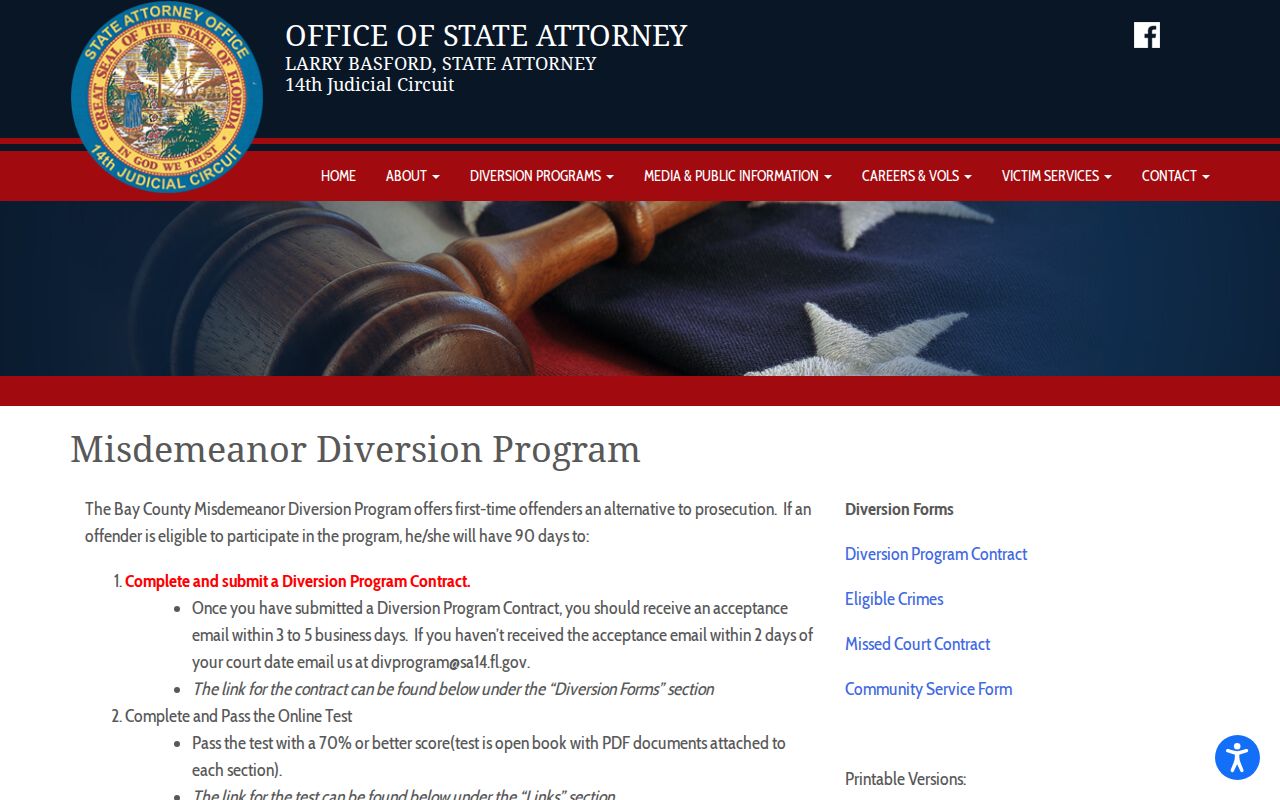
Participation is not a conviction, but neither participation nor successful completion automatically guarantees sealing or expunction; the recorded disposition and Florida eligibility rules still control.
Access & Restrictions
Florida court records begin with a presumption of access, but Rule 2.420 and Florida statutes protect confidential information. Juvenile files are generally confidential, with limited statutory exceptions. Victim details, Social Security numbers, financial-account data, and other protected categories may be redacted. Active criminal intelligence or investigative information held by law enforcement may also be withheld under §119.071 even when basic arrest facts are releasable.
A sealed record continues to exist with ordinary public access restricted. Expunction has a different legal effect and remains subject to confidential FDLE retention and statutory access. When a case does not appear, ask the Clerk whether the problem is spelling, posting delay, confidentiality, sealing, or the wrong court system; a federal matter belongs in PACER and a Florida appeal may be in ACIS.
Florida Public Records Law requires release of nonexempt portions rather than automatic denial of an entire law-enforcement record, but court access also follows judicial confidentiality rules. An online redaction does not necessarily mean the whole case is sealed. Ask the Clerk which authority controls a withheld portion and whether a public copy is available.